Big & Rich own the rights to the lyrics and music. Video found on YouTube: https://www.youtube.com/watch?v=6j22H2hxGHo.
Third Sunday of Pentecost: Galatians 1:11-24
Peace be with you!
Have you ever watched a television evangelist preaching about fiery hell? “Call my 800 number to make a donation to [whatever “it” is] and receive answers to all your prayers!” I giggle every time I hear Big and Rich’s song “Filthy Rich.” The second verse goes:
I saw a preacher on the TV
With big diamond rings on his hand
He was beggin’ for some money
He said to send us every penny you can
I guess the good Lord’s got a mortgage
And a payment on a yacht in the Keys
So we better keep sendin’ our hard earned livin’
To those God-fearin’ folks on TV[i]
Television evangelists asking for your money is nonsensical. God answers prayers in his own timing. Sure, Deuteronomy 14:22 says we should tithe to the Lord a tenth of our income. As a Christian, you are a child of God, and God has given all that you own. Therefore, when you give, you give back to God what is his. However, God does not care how much you give. There is no specific amount of money to guarantee your entry into the kingdom of God or the answering of your prayers. Jesus wants us to help those in need, freely and without compulsion. Making donations to your local church, Lutheran Services, Feeding America, National Ability Center, Compassion, World Vision, Charity:Water, and [whatever “it” is] you believe in helps others. The church or the organization should have some accreditations outlining how it will use the donations, so the givers know where their money is being used and what for.
Reflection Questions: What are some of your favorite nonprofits or causes? How do you help those in need?
Paul’s critics have been in Galatia questioning his accreditations among the people who are supporting his church and mission. His critics are asking the Galatians if they know Paul has persecuted Christians in the past and questioning how they can follow such a person. They do not understand how a man who grew up as a faithful Jew can turn his back on the Jewish traditions and speak about salvation through faith in Jesus Christ. The very person Paul persecuted others for following he now calls his Savior and calls others to follow.
Blasphemy!
Jews are attacking Paul’s conversion—his flipping sides. Jews do not understand how someone rejects a message one minute, and then the next minute is willing to die for the same message. As Christians, we can find hope in Paul’s conversion for our family members, friends, and colleagues who do not know or have a personal relationship with Jesus. We understand the resistance Paul is facing from his Jewish contemporaries. We know people who reject the good news too. We know how it feels to watch people who say they are Christian acting to the contrary.
Reflection Questions: How do non-Christians or other Christians criticize you? How do you handle the criticism? How does Paul’s example change how you will handle criticism?
The Jewish contemporaries resist any change to their faith traditions and do not accept Jesus Christ as their Lord and Savior. Paul’s message of the good news threatens the Jewish faith system and questions their ways of life. His critics question Paul’s authority to start churches in the name of Jesus and to tell people that they are saved by grace through faith in Jesus Christ; after all, Paul never personally knew Jesus when he was alive. How can someone have faith in an individual whom he never met?
Paul answers his critics with the snarky truth. “My accreditations,” he explains, “come from Jesus Christ’s revelation on the road to Damascus” (see Galatians 1:11-12). His accreditations do not come from a human origin; they come from the Lord God. As we noted in the last devotion, Paul is not looking for a “attaboy” from his contemporaries. Paul has made a lifestyle change; he is living for Jesus Christ—no one else. Paul is working on spreading the good news of Jesus Christ’s saving grace through Jesus’s crucifixion, death, and resurrection. Paul is looking to bring others into a relationship with God the Father, God the Son, and God the Holy Spirit.
Reflection Questions: Has anyone ever questioned your faith? How can you believe in an individual who died and rose two thousand years ago?
Paul does not give in to his critics. Paul confesses his past sins: he persecuted Christians before his revelation and advanced quickly within the structures of Judaism (Galatians 1:13-14). He is up-front with the Galatians and hides nothing about his past.
However, Paul is not who he was before his revelation. Now he takes no orders originating from humans; Paul’s orders come from God the Father through Jesus Christ. Through a revelation, Jesus calls Paul to share the good news wherever he goes and with whomever he meets. Paul’s life is transformed by his revelation from Jesus. Paul goes from a persecutor of Christians to a preacher of the good news and lives as a called Christian.
Reflection Questions: How has your faith changed you? Has it given you peace? Has it given you a purpose?
We are all called to share the good news wherever we go and with whomever we meet. You do not have to be called to preach to share the good news. You can be a doctor or a nurse who shares God’s compassion with your patients, a lawyer who shows mercy and grace to your clients, a chef who feeds the hungry, an accountant who protects the poor, an advocate who gives a voice to the silent, a parent who loves your children, a bus driver who cares for their passengers, or a [whatever “it” is] you do to share the good news. Paul uses the skills he learned in the Jewish faith system and as a Roman to spread the good news with the world. No matter what you do, God calls upon you to share the good news by living out the Christian faith. No matter what happened in your past, God offers you grace, mercy, forgiveness, and love. No matter what, God calls upon you to do his will in the world.
Reflection Questions: How has someone used your past against you? How did you try to change their perspective of you? How has your past made you a stronger Christian?
Thanks be to God!
Dear Heavenly Father, Thank you for giving Paul a revelation through Jesus Christ to change his heart toward you. Help us to work past the criticism of others and to continue to spread the good news, no matter who tries to stand in our way. Remind us we are all called to share the good news in our daily lives. Guide us to use our resources to feed the hungry, to protect the poor, to give the silent a voice, to heal the sick, and to clothe the naked. Thank you for calling us to be your voice and to act son your behalf in this world. Amen.
[i] Big and Rich, “Lyrics: ‘Filthy Rich,’” Google Play Music, https://play.google.com/music/preview/T3dsir65rbovtlscdu2rqvsswgq?lyrics=1&utm_source=google&utm_medium=search&utm_campaign=lyrics&pcampaignid=kp-lyrics&u=0#.


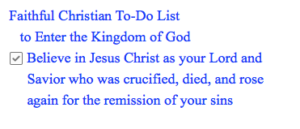 kingdom of God” (see Galatians 1:6-12). Paul is begging the Galatians not to get wrapped in some unnecessary checklist to meet the requirements to enter heaven. All you need is faith in Jesus Christ as your Savior.





 Jesus is the Good Shepherd who the sheep will follow
 calling our names, and we follow him (John 10:27), because we believe and know Jesus is the Messiah. We trust Jesus will keep us safe and protect us during difficult times. Jesus is the Good Shepherd who keeps his sheep (us) from wandering too far from the Lord. When we wander too far, Jesus comes looking—calling us back into the fold. Jesus calls us to be in community with one another in order to strengthen our own relationship with God the Father, God the Son, and God the Holy Spirit.
 are in the world to spread the good news of the power of the resurrection. We work to further Jesus’s message of forgiveness, grace, and love in order to bring others into a relationship with God the Father, God the Son, and God the Holy Spirit.


 man is Jesus before they can register the thought. The disciples are loyal and obedient to Jesus, even when they do not realize it. Jesus is also loyal to his disciples by coming to them between giving them the Holy Spirit and the pouring out of the Spirit on the whole church at Pentecost. He reassures the disciples that he remembers his promise to enable them to spread the good news. Jesus never leaves the disciples’ side, even after his death and resurrection. Jesus does everything in his power to help the disciples to fulfill his commission to them to spread the good news and to share God’s love with the world.
 put over the fire for breakfast and breaks bread, which might remind them of the feeding of the five thousand and the Last Supper. The fact Jesus already has fish on the fire demonstrates how he always has our backs. Jesus always finds a way to enable us to spread the good news and to share God’s love in the world. Jesus will always give us the tools we need to do God’s work. Yet by asking for some fish the disciples caught, Jesus also demonstrates how he finds ways to use our unique gifts in order to do his work in the world. Jesus uses our gifts for his glory.
 Peter cannot love him as deeply as he loves him. Jesus knows Peter loves him, even before the interrogation, yet these questions make Peter uncomfortable. He knows the Lord knows his heart, so why does he keep asking? What point is Jesus trying to make? Jesus’s questions reverse Peter’s three denials of knowing Jesus by restoring his relationship with the Triune God. The interrogation demonstrates the power of the resurrection and God’s forgiveness, grace, and love. There is nothing that can separate us from the love of Christ.
 through your actions toward others. Your commission is to go out into the world in order to feed and tend to God’s lost sheep. It requires you to go beyond your community by stepping out of your comfort zone in order to bring others into a relationship with God the Father, God the Son, and God the Holy Spirit. If you see someone who is hungry, give her food. If you see someone who is homeless, give her shelter. If you see someone who is hurting, tend to his wounds. If you see someone who is lonely, welcome him into your community. By doing so, you will nourish and nurture a community centered around God’s love—a selfless love that breaks the barriers of time and space.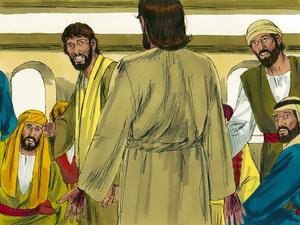
 to build meaningful and lasting relationships. We struggle to create authentic communities that would have people who lift up our strengths and lament with us in our brokenness. We struggle to connect with a seemingly distant and unseen Lord.
 distance between the situation and themselves. Others turn to drugs or alcohol to escape reality, while others may just deny [whatever “it” is] ever happened. The disciples are hiding until they can figure out their next step.
 finger here and see my hands. Reach out your hand and put it in my side. Do not doubt but believe.” Then Thomas says, “My Lord and my God!” (John 20:27-28 NRSV). Thomas gets to see Jesus’s hands, feet, and side where he was nailed to the cross and stabbed. He gets up close and personal and sees Jesus’s wounds, and therefore, he believes.
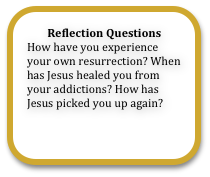 Lord. You submerge yourself in your brokenness—depression, anxiety, post-traumatic stress disorder, physical limitations or [whatever “it” is], but then you realize God loves you, despite your brokenness, and you turn back to the Lord. The power of the resurrection is that Jesus falls aside us, and he picks us up time after time again!